
Our history
Fès elders refer to Sbaa Louyat as one of the most exclusive streets in the old medina. Sbaa Louyat was said to be one of the cleanest streets in Fès.
This was the home of the great bourgeois families. A refined art of living was imbued with age-old traditions, combining balanced social relations with architectural aesthetics and a clean environment.
In earlier times, this district was undoubtedly home to scholars and teachers from the nearby Qaraouiyine. Oral tradition has it that the great scholar Abu'l-'Abbas Ahmad al-Manjur (AH 926 / AD 1519 - AH 995 / AD 1588) lived here. A house bearing his name stands in rue sbaa Louyat (Dar al-Manjur). According to specialized studies, the Dar 7 Louyat house itself dates back to the Marinid period (14th-15th centuries) (See the work by Revault, Golvin and Amahan, CNRS, now online)
We know that in the 12th century, great scholars studied at the nearby Quaraouiyine: the philosopher Averrroes, Maimonides, Ibn Khaldun...
The majesty of the riads in this part of the medina bears witness to this era, and we've restored ours to recapture some of that bygone atmosphere.
History and architecture
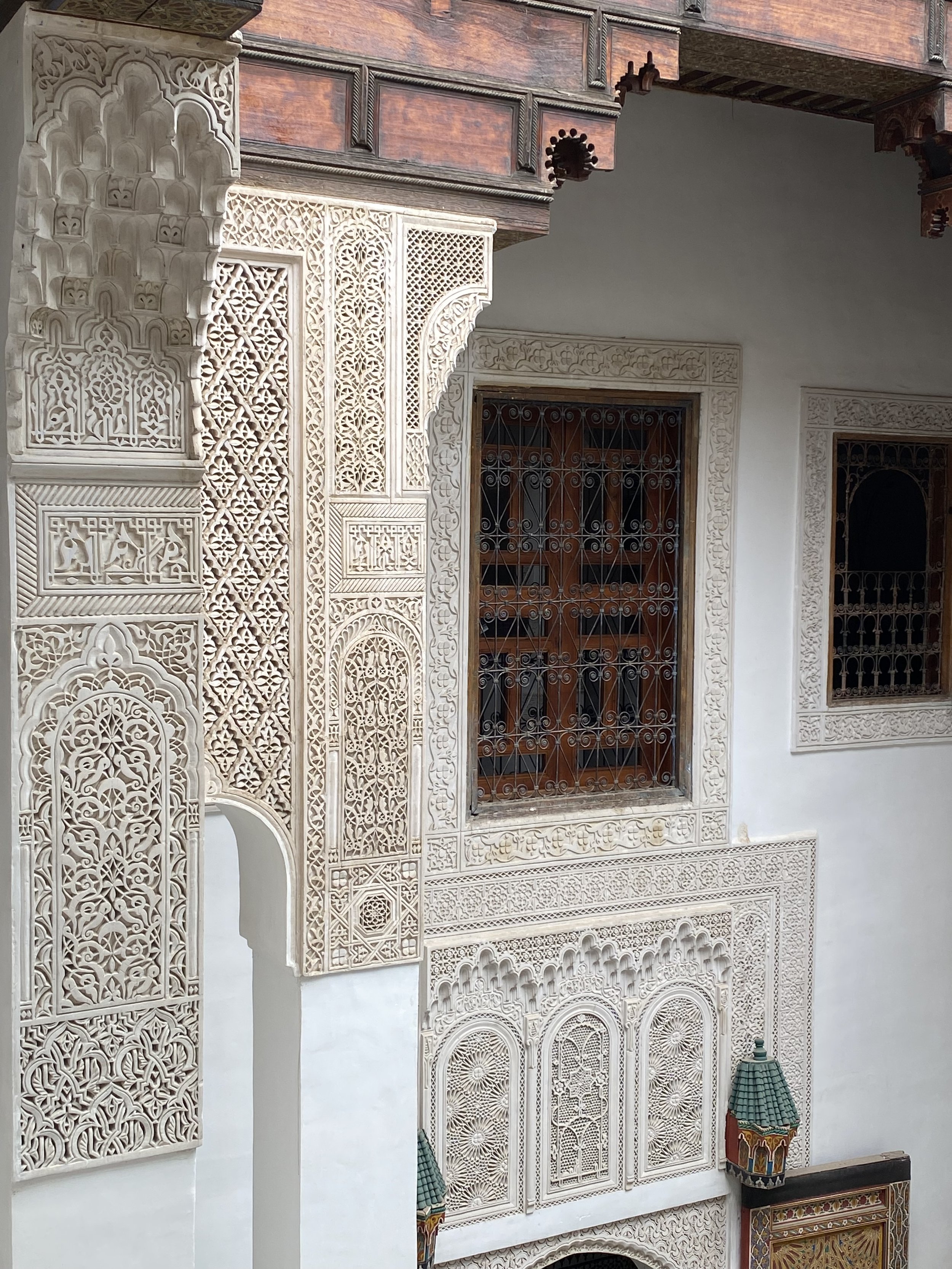
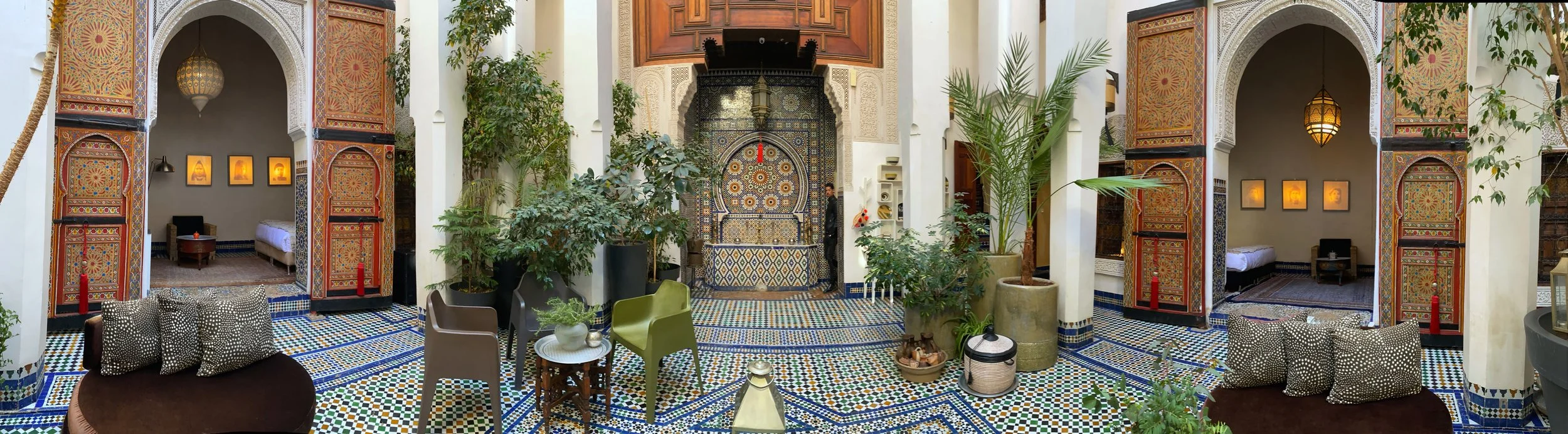
Dar 7 Louyat is a magnificent 15th century mansion, a haven of peace in the heart of the medina of Fez, close to the oldest university in the world, the Great Qaraouyine Mosque, and at the center of Fez's artisan life.
Dar 7 Louyat is a "riad" or rather a "dar", an old traditional medina house typical of Islamic architecture. It was long inhabited by the scholars of the Quarayouine mosque.
Our house has been meticulously and extensively restored according to the traditional rules of local architecture.
Its architectural features are elegant and light, providing a sense of rest and peace that contrasts with the bustle of the medina.
The owner's artistic touch gives this home its distinctive character.

dar7louyat guest house
Restoration work


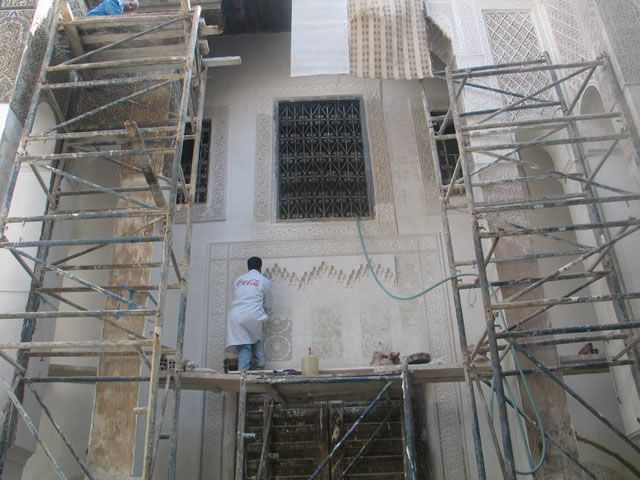



It took over ten years to patiently restore the riad. It's been a wonderful adventure, littered with exciting discoveries and encounters. We've learned patience, and we've been lucky enough to work with people of great humanity, keen to preserve their cultural and architectural heritage.
Here are a few photos.


